Business
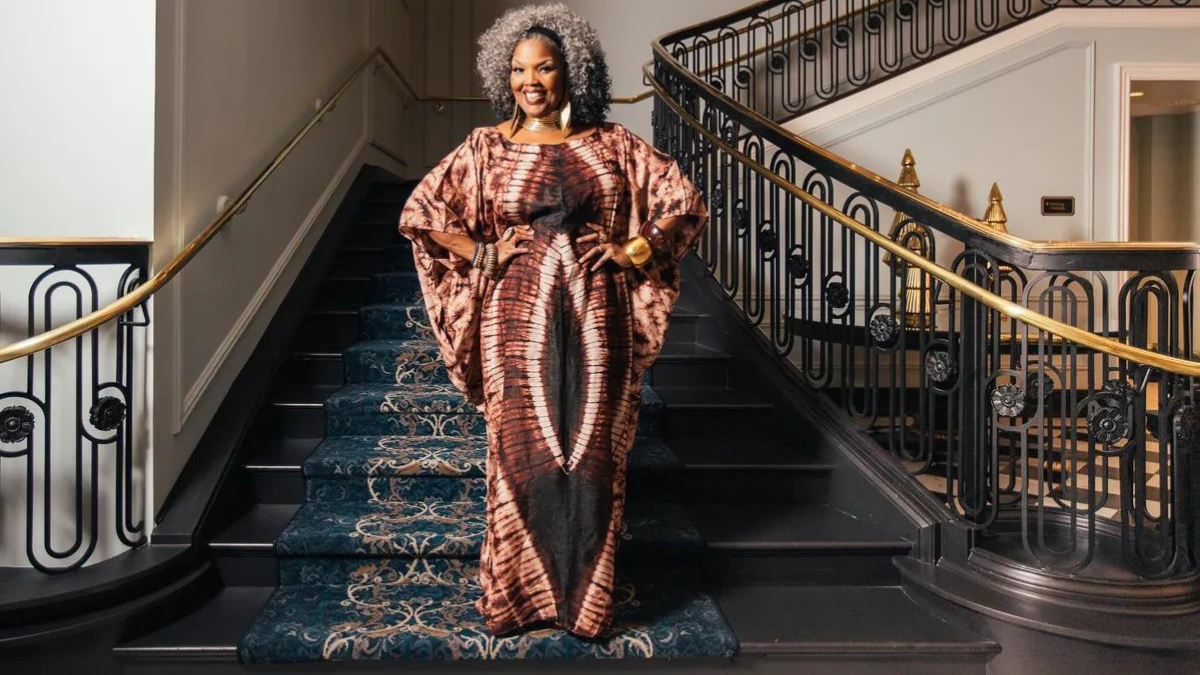
Interview with Opera Stage Soprano Angela Brown
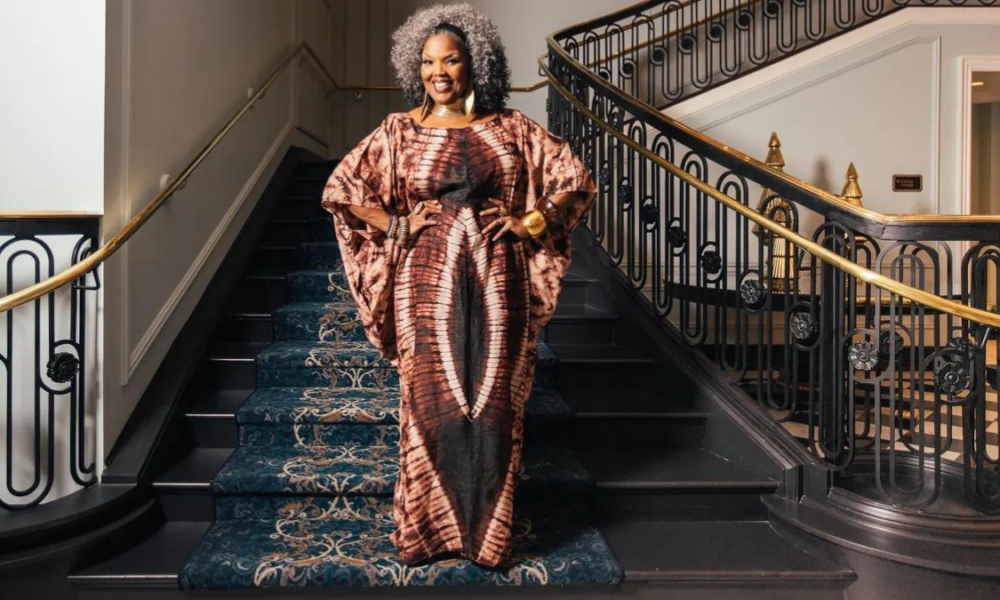
Angela Brown personifies the ideal soprano: sheer vocal power; luxurious finesse; and shimmering, high pianissimos. With a charming personality larger than life, she unites opera, pops, and gospel in one sensational voice and has graced the leading opera and symphonic stages across six continents. A featured artist on the two-time Grammy Award® winning recording “Ask Your Mama,” Angela’s international reputation continues to grow.
Published
4 years agoon
By
Contributor
TVM: Today I have the distinct privilege of speaking with a Sister lighting up the opera stage Soprano Angela Brown. How are you today?
AB: I am fine thank you for having me
TVM: Thank you so much for speaking with us we really appreciate it. Before we get into your voice, and your opera, from a sister’s point of you how exactly did a “SISTA’S” gravitate towards opera?
AB: You know I always say that opera chose me, I did not choose it. I’ve always sung I started out singing in my gran father’s Baptist church, and as I got older, I started doing a lot of musical theatre and other genres of music but, classical music was the last thing I picked up. When I went to Oakwood University in Huntsville Alabama my teacher there said you know you can do this for a living. And so as I began to learn the technique I took to it like a duck to water! It was nothing! It was very easy for me. The challenges have been as I’ve gotten older and I get more and more use to my technique, not staying in something that I was use to but growing with it. That’s a challenge for every singer, is to grow with their instrument, and not just rely on what was easy in the beginning but to always keep cultivating and making it better. So I always say opera choose me I didn’t choose it because I sang so many other genres it was the last thing, and people wanted to pay me.( she laughs..)
TVM: My parents are CNN junkies, so I often get stuck in there web, I do recall seeing a segment with Tony Harris.
AB: Yes
TVM: “What matters”, and you were on there, can you just elaborate a little bit for our readers.
I did a segment with Tony Harris about opera from a sister’s point of view. It’s a show that demystifies opera for audiences that normally would not go. When I first started doing the show, my first idea was I wanted to bring it more to my people, people of color because when I was out on the opera stages of the world there were mainly monochromatic. It was a bunch of white folks looking at me. And I was like… Where are the people of color? When I was younger, I know that I had the opportunity to go to a lot of symphony concerts, ballets, and things like that. Now a day’s they’ve cut so much music out of the schools kids don’t even know who Lya/Tya Price is, and she ain’t that far in the back. So I wanted to start the show to let my people know (she laughs) that we too can do this. But as I began to do the show honey…)I found out that white people don’t like opera either, so it’s become about embracing opera. It’s an art form that you will find yourself in there are African operas I don’t care how many people you paint up. Ieda it’s an African opera! Egypt and Ethiopia are in Africa I claim it honey…) You have African American operad “Porky and Bess” You have Asian operas Madam butterfly and Turindo. You have Italian operas Natasko, and that list goes on. Hispanish operas like Carmen. You will find yourself an opera it’s just a matter of trying it. Don’t say you don’t like a mushroom until you’ve had a mushroom. At least go and enjoy the art form. So that’s why I started opera from a sister’s point of view and that’s what Tony and I were talking about on CNN.
TVM: I enjoy the fact that you seem to take a lot of care in infusing the youth and to educating everyone about opera Kudos to you for that. When I hear you sing for me it’s like what I would imagine heaven to be like. If you could describe your voice, how would you describe it?
AB: Oh Wow! It’s funny that you would ask me this questions cause I was listening to myself sing on some recordings. My very first recording on to this last recording I just did. I just listened and I hear the development and I would say that my voice if I can encompass everything that I’ve heard over the years, I would say I have an even smooth middle with high spinning sparkly tops. And a very rich low gewy chewy delicious bottom register. It’s like a piece of Godiva chocolate that melts in the pit of your mouth. That’s my voice.
TVM: Who were some of your vocal inspirations growing up?
AB: I did not come to classical music till I was 21 which was 2 days ago. (She laughs)
I would say growing up, some of my big influences were, Gladys Night, Natalie Cole. When she first came out with that 1975 album “In separable” child…. She was my girl! Then we go to broad way and it was Jennifer Holiday. (she’s singing Your gonna love me )On the male side it’s Stevie Wonder, James Ingram, Jeffery Osborne then, can’t leave out Mr. Luther Vandross. Group wise there was Earth Wind and Fire, The Commodores. For gospel it’s Milton Brunson the Hawkins family, the Winans, the Clark sisters. I believe in building a voice you have different influences, and I believe also, that is one of the reasons why I am sought after because I can fit so many bills just because I never let go of all my influences it’s all a part of making up me and my voice because when it comes to classical music I tend to go towards the voices that are not necessarily so sterile sounding, they are more beauty, and they are more Bellecanto they are singing the meaning of the words like Maria Culluses, and Latin prices who is my biggest influence. Jessie Norman, Kathleen Battle. The Giozati who was teacher. To have all of those influences in the same sloop, The same stew that I came out of which was a heavy R&B gospel thing, and then to put that it’s just going to make me a more well-rounded singer.
TVM: Do you have a vocal routine? If yes can you tell your readers about it?
AB: When I am preparing I might do some humming, vocalise, and some listening but if I don’t have anything of the essence to prepare for, I’ll do light stuff, and I’ll teach. But when I am ready to prepare for something, like I’m getting ready to go to Calgary to do Tulsca, I’m going to go over the music with my coach or an accompanist just to make sure I have everything, and that the Italian is clean. So that’s my routine it is very light until I get closer to the actual job, and then I will train more. When I learn a new role that’s a different process, you go through the first three months just adapting to the role in your voice, and listening and getting it into your body with your ear orally. I always listen orally first even if I lean the mistakes I can always go back and then when I get with my coach they break down the rhythms, and the language, and I would rehearse it till I memorize it.
TVM: Speaking of the different languages, because you perform in various languages I am curious to know if you speak any of them?
AB: Well you know I get around with a first person Italian (she laughs) I married a French man and he speaks fluently, French, English and Italian. So I’m not fluent In French, no- where near it but I can get around.
TVM: People have these miss conceptions of how physical it is for an opera singer, and I was just wondering if you find a connection between vocal workouts and physical work-outs?
AB: Yes! You know when you don’t have breath, you don’t have voice. And if you are not doing something to raise your heart rate, and sing along…) I don’t choose to run or jog, I choose to walk or ride a bike. There are a whole lot of things to do then hurting my knees… child( she says jokingly) you have to keep your physical-self up. I always know when I have not done enough because I know I don’t feel my breath as well you don’t feel your support as well. Doing sit ups and crunches just to keep connected to that core. Helps!!
TVM: Does what you eat affect your voice for the positive or the negative?
I stay clear of anything creamy/dairy. I get ready 3 hours before the curtain so I’m going to eat some chicken soup or a salad maybe a sandwich. I stay away from anything that will cause your saliva to thicken I stay away from. And that could be orange juice, raisins, bananas, (she says I hate bananas… and laughs). Smoothies there fine and some bread, there fine too. I’m going to give it to you straight grapes fruits, apples, apples are wonderful, warm temperature apple juice is great because it is as closes to saliva, because water can actually dry you out a little bit. Yeah! Hydrate! Hydrate! Hydrate! Drink a lot of water but during the show, because apples juice will also produce saliva, it helps you more.
It makes you salivate.
TVM: What time of day do you feel vocally at your best?
AB: I feel vocally at my best around 4:00 or 5:00 on through to midnight, then I’m ready to shut it down, but you know I do what I have to do but I am at my vocal prime around 4:00 in the afternoon those are the diva hours (she laugh).
n this question, because I believe a lot of singers have passion and pride about themselves, they have standards, they have morals. There are a lot of singers out there that live for the craft, but don’t live for the craft that they are willing to sacrifice their souls for it ain’t that deep. To say that I am different, I don’t know I have to let whoever is doing the listening answer that question, because for me personally I am a working singer so I never see myself as a big “I” or a little “u” or anything. I am God’s child, I am a working singer, and I’m blessed. Ain’t nothing lucky about Angela Brown this is all blessings, God’s got me all the way.
TVM: Which do you prefer recording in the studio or performing live?
AB: You know it depends, because I’ve done a live recordings and I’ve done a studio recording and I have to say that I like the studio a little better because I can make all the stuff that didn’t go well in performance right. I love being on stage, I love doing what I do. But I like recording! Give me some shine, some shade, some reverb, turn it up (she laughs).
I have a new CD coming out it’s a compilation CD Richard Daniel pour did a song cycle for me and Dr. Mia Angelo wrote the Lebreto, and its called a women life it will be released on (Knoxso records)Richard Danielpor’s it’s with the national symphony there are 3 pieces Darkness in the ancient valley, A womens life, and Lacre men…… It will be realised on September 26 2014.
TVM: What advice can you give to up and coming artist?
Never let anyone determine what success will look like for you, because every bodies success will be different. Everybody is going to have a different way to achieve it. And it’s interesting that you said that it is hard to break through in to the music industry. If you think of breaking something you already put a barrier in front of yourself. So take the limits off because God is limitless! It is hard for us to think in infinite terms when we have finite minds. So don’t let anybody determine what success will look like to you. And If you are singing you are in the industry it’s just a matter of getting in front of the right people. SO if you are singing and doing it well, somebody is going to hear you. When an opportunity presents its self, open your mouth there is nothing to big or to small and it cannot always be about the dollar neither can it be about never getting the dollar. However sometimes it’s about the exposure or for your own personal enrichment.
What I tell all the young people that I do master classes with is If this is your passion if you wake up, you eat and sleep this, and you know that you can do this, stick with it. There is no harm in being a star where you are. When I won the met competition in 97 I use to go around and tell these young people if you want to go to the met all you have to do is believe it, and you can do it.my mom one day said Angela stop telling that lie ( she laughs) I said why Momma!? She said; It’s not meant for everybody to sing at the Metropolitan Opera. It’s not necessarily their testimony or their destiny in life. So what I say now is why can’t you be a star were you are not everybody can’t sing at the Met. If it’s not going to be on a national stage, maybe it will be regional. Maybe it may be just right in your state, in your church, or your denomination. In a nut shell, you have to want this that means not putting things in your way that’s going to hold you down, or hold you back.
TVM: What is you ultimate goal when you perform, what do you want your fans to take away from your performance?
When I signed my contract my ultimate goal is to get my check, and pay my bills But in getting my check and paying my bills, I must be worthy of my check. So I want to give a good performance I want to give a performance where they feel full. They be like dammm… that girl can do anything! Because I always want to keep those doors of other opportunity I’m a business women too. I want to give my fans flavors there is so much in me and so many roots from different genres of music. If I don’t share some of everything I am I feel like it’s a disservice so I’m giving you some spirituals I’m giving you a little taste of gospel with a little bit of R&B you know and of course the heavy classical stuff but! I’m going break it down with a little humour I’m going to talk to you.
You may like
-
From “Killing Me Softly” to a Federal Sentence: The Pras Michel Saga and the Peril at the Intersection of Music and Politic.
-
My Hair Is Killing Me: Examining the Health Impact of Synthetic Braiding Hair on Black Women
-
The Harajuku Barbie Dynasty: The Eternal Reign of Queen Nicki
-
The Hollow Heart: When Corporate Manifestos Betray the Very Artists They Claim to Serve
-
Beyond Influencers: Why Your Next Social Media Manager Might Be a Prompt Engineer
-
The Reel Threat: What Trump’s Proposed Movie Tariffs Mean for Canada’s Film Industry
Business
From “Killing Me Softly” to a Federal Sentence: The Pras Michel Saga and the Peril at the Intersection of Music and Politic.
This is more than just the fall of a celebrity;

Published
3 months agoon
November 26, 2025By
Contributor
The story of Pras Michel is a modern American epic, a dizzying arc that travels from the pinnacle of 1990s cultural influence to a federal courtroom and a 14-year prison sentence. It’s a tale that encompasses the birth of a legendary hip-hop group, global stardom, a foray into political kingmaking, and a stark warning about the dangers that await artists who venture into the shadowy world of high-stakes politics.
This is more than just the fall of a celebrity; it’s a case study in how fame, money, and political access can create a perfect storm, leaving a artist vulnerable to manipulation and, ultimately, destruction.
Part 1: The Formation and Ascent of the Fugees
In the early 1990s, in the suburbs of New Jersey, a unique musical force was taking shape. Prakazrel “Pras” Michel, a Haitian-American, teamed up with his cousin Wyclef Jean and a phenomenally talented vocalist named Lauryn Hill. They called themselves the Fugees, a truncated version of “refugees,” a nod to their diverse, immigrant-rooted backgrounds.
Their 1996 sophomore album, “The Score,” became a cultural earthquake. It was a masterpiece of fusion—blending hip-hop, soul, and reggae with socially conscious lyrics and impeccable artistry. With timeless hits like “Killing Me Softly,” “Ready or Not,” and “Fu-Gee-La,” the album sold over 17 million copies worldwide, making the Fugees one of the best-selling hip-hop groups of all time. They weren’t just musicians; they were global icons, celebrated for their intelligence, their message, and their sound.
Part 2: The Solo Path and the Lure of Politics
After the group’s acrimonious split and the members’ pursuit of solo careers, Pras’s path diverged. While he had a solo hit with “Ghetto Supastar (That Is What You Are),” his focus began to shift from the recording studio to the corridors of power.
Pras leveraged his celebrity and wealth to become a player in Washington D.C.’s political scene. He became a regular at fundraisers and galas, cultivating relationships with powerful figures. This was the era of “celebrity politics,” where a star’s endorsement could bring glamour, youth appeal, and significant fundraising clout to a campaign.
His most notable foray was his fervent support for a young, charismatic senator from Illinois: Barack Obama.
Part 3: The Crime: A Web of Illegal Donations and Foreign Influence
This is where the story turns from one of ambition to one of alleged crime. In April 2023, a federal jury convicted Pras Michel on 10 felony counts, including:
- Conspiracy
- Acting as an unregistered agent of a foreign government (China)
- Witness tampering
- Funneling illegal foreign contributions into the 2012 Obama re-election campaign.
The prosecution laid out a complex narrative. They alleged that Pras, seeking influence and financial gain, became a conduit for the Malaysian financier Jho Low, the alleged mastermind behind the massive 1MDB scandal that siphoned billions from a Malaysian state fund.
The scheme was intricate. According to the Justice Department, Low transferred millions of dollars to Pras. Michel then used that money to orchestrate a “straw donor” scheme, bundling illegal foreign contributions into Obama’s 2012 campaign. The goal? To buy access and influence for Low, who sought the administration’s help in quash a Justice Department investigation into his activities and to have a Chinese dissident forcibly returned to China.
Pras was accused of being a “foreign agent,” using his American celebrity as a smokescreen to advance the interests of a fugitive financier and the Chinese government.
Part 4: The Danger: When Artists Are Manipulated by Politicians
The Pras Michel case is a cautionary tale about the vulnerability of artists in the political arena.
- The Currency of Access: For a politician, a celebrity like Pras was a valuable asset. He could open doors, attract media, and, most importantly, raise money. The system incentivizes this relationship, but it provides few guardrails to protect the artist from its pitfalls.
- The Asymmetry of Power: An artist, no matter how famous, is often a novice in the ruthless, byzantine world of geopolitics and campaign finance law. Politicians and their operatives are experts in this field; celebrities are not. This creates a power imbalance where the artist can easily become a pawn, used for their brand and bank account without fully understanding the legal and ethical minefields they are crossing.
- The Allure of “Being in the Room”: For some artists, the thrill of moving from backstage to the Situation Room is intoxicating. This desire for real-world power and relevance can cloud judgment, making them susceptible to the flattery of powerful figures like Jho Low, who offered a taste of that world in exchange for services rendered.
While Pras maintained his innocence, claiming he was being scapegoated, the jury found that he had crossed a line from being a political supporter to an illegal operative.
Part 5: The Take for the Future
The sentencing of Pras Michel to 14 years in prison sends a powerful message. So, what are the takeaways for the future of music, politics, and their dangerous intersection?
- For Artists: Fame is not a shield. The laws governing political donations and foreign lobbying are strict and carry severe consequences. The desire for political influence must be tempered with rigorous legal counsel and a deep understanding of the boundaries. Authentic activism is one thing; becoming a paid conduit for foreign interests is another.
- For the Political System: The case highlights the perpetual vulnerability of the campaign finance system to illicit foreign money. The use of straw donors and shell companies remains a critical weakness in American democracy, allowing foreign actors to potentially influence policy through proxies.
- For the Public: It forces us to look more critically at the relationship between celebrity and politics. A famous endorsement should not be taken at face value; it’s essential to ask what motivations and funding might lie behind it.
The legacy of the Fugees is now permanently shadowed by this scandal. Where once their music spoke of unity and social justice, one of its creators has been convicted of conspiring against those very principles for money and access. The saga of Pras Michel is a tragic reminder that the transition from cultural icon to political player is a perilous one, fraught with legal traps and moral compromises that can ultimately silence the artist for good.
Business
My Hair Is Killing Me: Examining the Health Impact of Synthetic Braiding Hair on Black Women
Black women report symptoms that go far beyond mild irritation.
Published
4 months agoon
October 31, 2025By
Contributor
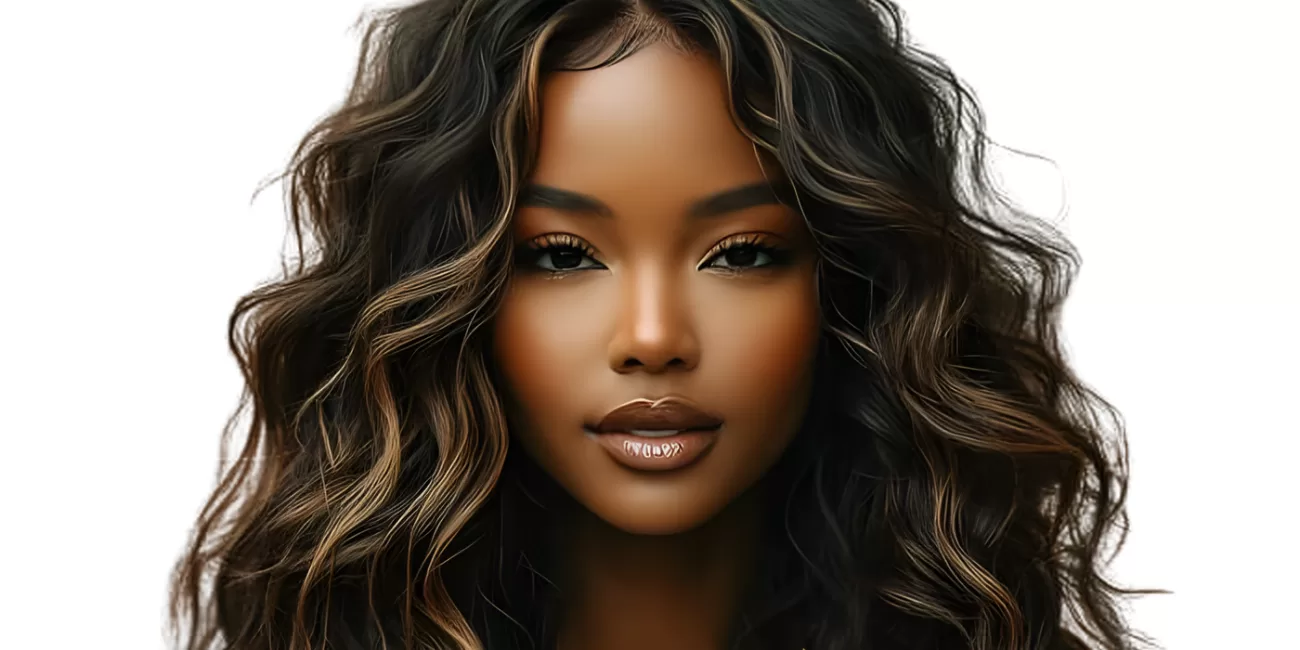
For generations, braided hairstyles have been a cornerstone of Black culture, symbolizing everything from social status and kinship to personal expression and resilience. The use of synthetic braiding hair has made these protective styles more accessible and affordable than ever. However, in recent years, a growing number of women have reported concerning reactions to the hair, leading to urgent questions about its safety.
This article delves into the potential health impacts of synthetic braiding hair, examining the ingredients, the reported issues, and the crucial recommendations for making safer choices.
The Problem: More Than Just Itchy Scalp
While a little itching when first installing braids is common, many Black women report symptoms that go far beyond mild irritation. These can include:
- Severe Scalp Dermatitis: Intense itching, redness, swelling, and flaking.
- Bumps and Blisters: Painful, pus-filled bumps (folliculitis) along the hairline and parts.
- Hair Loss: Traction alopecia from the style’s tightness, compounded by inflammation that can weaken hair follicles.
- Scalp Burns and Sores: A sensation of the scalp “burning” or “crawling,” sometimes leading to open sores.
- Allergic Reactions: Swelling of the face, eyelids, and ears.
These reactions are not just anecdotal. A 2022 study published in the Journal of the American Academy of Dermatology identified a specific pattern of allergic contact dermatitis directly linked to synthetic braids, dubbing it the “Kanekalon phenomenon,” after a popular brand of braiding hair.
The Culprits: What’s in the Hair?
Synthetic braiding hair is typically made from modacrylic, a polymer derived from acrylonitrile and vinyl chloride. The hair itself is not the only concern; the chemical coatings and dyes used to give it a more natural look and feel are often the primary triggers.
The main suspects causing adverse reactions are:
- Formaldehyde: Perhaps the most alarming ingredient. Formaldehyde or formaldehyde-releasing preservatives are sometimes used in the coating of synthetic hair to prevent mildew during shipping and storage. Formaldehyde is a known sensitizer and a Group 1 carcinogen, meaning it is proven to cause cancer in humans. Direct, prolonged scalp contact can cause severe allergic reactions and skin irritation.
- Acrylates: These plastics are used to seal the ends of the hair when you dip them in hot water. They are also common allergens and can cause significant contact dermatitis.
- Dyes and Colorants: The vibrant colors of synthetic hair come from dyes that can contain heavy metals or other chemicals that some individuals are sensitive to.
- Plasticizers: Chemicals added to make the plastic fibers more flexible can also leach out and irritate the skin.
The Cancer Question: Are Synthetic Braids Carcinogenic?
This is the most serious concern. The direct answer is: There is no conclusive scientific evidence that wearing synthetic braids causes cancer.

However, the concern is not unfounded and stems from the ingredients:
- Vinyl Chloride, a component of modacrylic fiber, is a known human carcinogen.
- Formaldehyde, sometimes found as a contaminant, is a known human carcinogen.
The critical distinction is between ingestion/inhalation and skin contact. The cancer risks for these chemicals are primarily associated with long-term, high-level inhalation (as seen in factory workers) or ingestion. The risk from dermal (skin) absorption through the scalp is considered significantly lower and not well-studied.
While the risk of developing cancer from occasional braid wear is likely very low, the potential presence of known carcinogens in a product worn on the head for weeks at a time is a valid cause for caution and demands greater transparency and regulation.
Recommendations for Safer Styling
You don’t have to give up braids entirely. Informed choices and proper practices can dramatically reduce the risk of a reaction.
1. Pre-Installation: The “Prep & Test” Ritual
- WASH THE HAIR: This is the single most important step. Before installation, soak the synthetic hair in a mixture of apple cider vinegar and water for 15-30 minutes, then rinse thoroughly. Follow this by washing the hair with a clarifying shampoo to remove surface chemicals, dyes, and residues. Let it air dry completely.
- CONDUCT A PATCH TEST: Tape a small strand of the washed and dried synthetic hair to the skin behind your ear or on your inner arm. Leave it for 24-48 hours. If you see any redness, itching, or swelling, do not use that hair.
2. Smart Shopping: Choosing Better Hair
- Look for “Hypoallergenic” Brands: Some brands now specifically market themselves as free of formaldehyde and other common irritants. They may be more expensive, but your health is worth the investment.
- Opt for Sealed Packages: Hair sold in sealed packaging is less likely to be contaminated with dust, mold, or other environmental irritants compared to bulk, open-hair.
- Consider Human Hair or Heat-Friendly Synthetics: While more costly, human hair braids eliminate the risk of synthetic chemical reactions. “Heat-friendly” synthetic hair often has a different coating that may be less irritating, though it should still be washed.
3. During and After Installation
- Communicate with Your Stylist: Advocate for yourself. Ensure your stylist does not braid too tightly, as this can cause traction alopecia and force the hair fibers deeper into irritated follicles.
- Moisturize Wisely: Use a light, water-based moisturizer on your scalp and natural hair. Avoid heavy oils and butters that can trap bacteria and residue against the scalp.
- Don’t Wear Styles Too Long: 6-8 weeks is the general maximum. Wearing braids for longer increases the risk of buildup, matting, and prolonged exposure to any remaining irritants.
- Listen to Your Body: If your scalp is burning, intensely itchy, or developing painful sores, do not “tough it out.” Take the braids out immediately and consult a dermatologist.
Conclusion
Synthetic braiding hair is a cultural and practical staple, but its potential health impacts cannot be ignored. While not definitively cancer-causing, the presence of harsh chemicals and known allergens poses a real risk for severe skin reactions.
The power lies in informed consumerism. By demanding cleaner products from manufacturers, washing hair before use, and listening to our bodies, Black women can continue to celebrate the beauty and convenience of braided styles without compromising their health. The choice to wear braids should be one of empowerment, not one that leads to pain and distress.
Business
The Harajuku Barbie Dynasty: The Eternal Reign of Queen Nicki
Nicki Minaj’s Unrivaled Reign and the Anticipation for ‘Pink Friday 2’
Published
5 months agoon
October 15, 2025By
Contributor
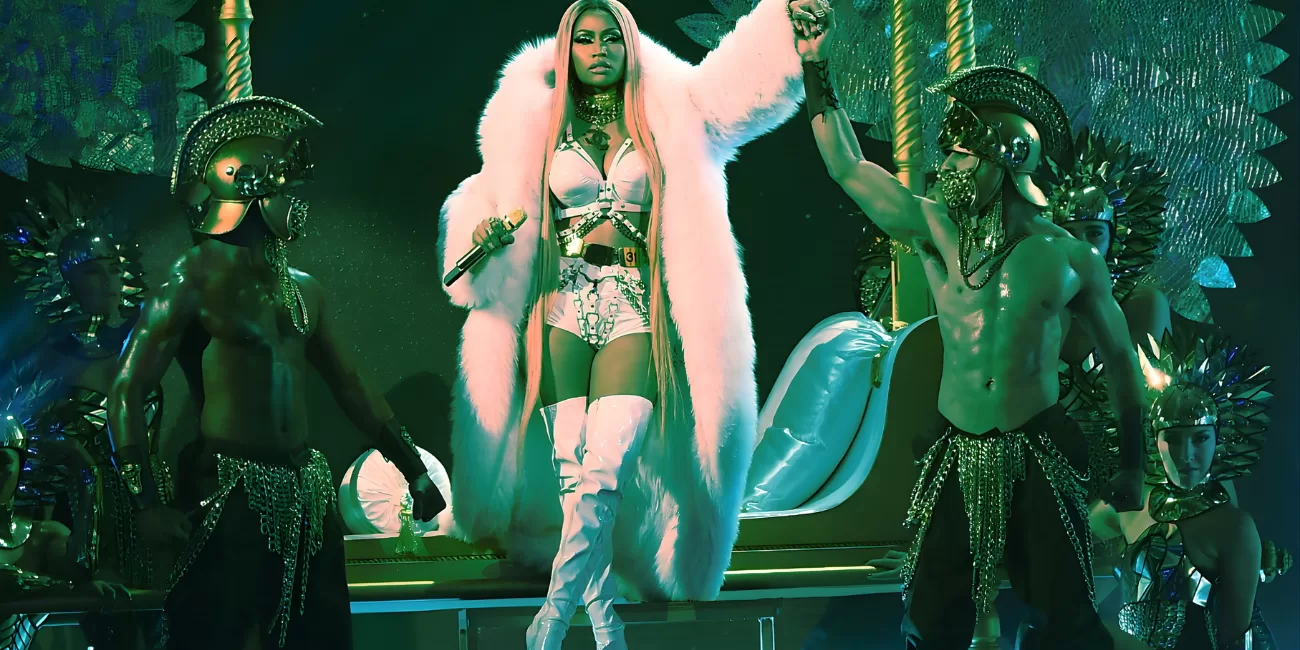
In the ever-shifting landscape of hip-hop and pop, where careers can be as fleeting as a viral trend, Nicki Minaj has not only secured her throne but has built an entire empire around it. For over a decade, she has been a dominant, disruptive, and undeniable force, reshaping the sound, style, and business of female rap. As the world awaits her next chapter with the upcoming “Pink Friday 2” in 2026, it’s the perfect moment to reflect on the legacy of the artist who taught a generation to go hard.
The Architect of a New Era
Before Nicki Minaj, the idea of a female rapper consistently topping the Billboard charts, breaking streaming records, and commanding global pop culture seemed like a distant dream for many. She didn’t just break through the glass ceiling; she shattered it with a pink sledgehammer. Her impact is multifaceted:
- Commercial Viability: Nicki proved that a female rapper could be the central star, not just a featured guest. Her early mixtapes created an insatiable buzz, leading to a record deal that positioned her as a flagship artist. She paved the way for the commercial success of the diverse wave of female MCs who followed, demonstrating that there was a massive, hungry audience for their artistry.
- Artistic Persona and Camp: Drawing inspiration from icons like Lil’ Kim, Nicki took the concept of alter-egos to a new level. From the soft-spoken Roman Zolanski to the barbie-doll Harajuku Barbie, she created a universe that was as theatrical as it was musical. This blurred the lines between rapper and performance artist, encouraging authenticity and eccentricity in a genre that often prized conformity.
- The Blueprint for Business: Beyond music, Nicki became a master brand architect. From lucrative endorsements to her own perfume lines and a successful stint on American Idol, she showed that an artist’s influence could—and should—extend far beyond the recording studio.
A Chameleon on the Mic: Vocal Abilities
To reduce Nicki Minaj’s talent to simply “rapping” is to overlook her vast technical skill set. Her vocal abilities are a key instrument in her arsenal.
- The Versatile Flow: Nicki is a master of rhythm and cadence. She can switch from a rapid-fire, machine-gun flow on tracks like “Monster” to a smooth, melodic sing-song delivery on hits like “Super Bass” or “Truffle Butter.” This versatility allows her to dominate hardcore hip-hop tracks and seamlessly cross over into pop and dancehall, making her one of the most adaptable features in the game.
- Character and Voice: Her background in theater is evident. She uses distinct character voices, accents, and inflections to bring her lyrics to life. The aggressive, gritty tone of Roman contrasts sharply with the high-pitched, bubbly persona she often employs, adding a layer of theatricality and humor that is uniquely her own.
- Melodic Sense: While not a powerhouse vocalist in the traditional sense, Nicki possesses a keen melodic intuition. Her ability to craft infectious pop hooks, often by blending singing with rhythmic talking, has been central to her chart success. She understands pop structure as well as any hitmaker, using her voice as a versatile tool to create memorable moments.
The Test of Time: Unmatched Longevity
In an industry known for its fickleness, Nicki Minaj’s longevity is her most powerful argument for greatness. Her career is a story of consistent relevance.
- Decade-Dominating Hits: From her explosive debut with “Massive Attack” and “Your Love” to era-defining smashes like “Super Bass,” “Starships,” “Anaconda,” and “Super Freaky Girl,” she has scored hits across three different decades. She has maintained a presence on the charts through multiple musical shifts, from the bloghouse era to the rise of streaming and TikTok.
- The Barbz Dynasty: She cultivated one of the most dedicated and powerful fan bases in the world—the Barbz. This digital army ensures her influence remains potent, breaking records with every release and defending her legacy with fervent loyalty. This direct artist-fan connection has been a cornerstone of her enduring career.
- Evolution, Not Reinvention: While she has adapted to the times, she has never abandoned her core identity. She can deliver a pop-rap anthem, a hardcore verse for the purists, and a vulnerable, introspective track on the same album, proving her depth and satisfying her diverse audience.
A Crown Adorned with Jewels: Monumental Achievements
The numbers and accolades speak for themselves:
- The best-selling female rapper of all time.
- The first female artist to have 100 entries on the Billboard Hot 100.
- The first solo female rapper to have a song debut at #1 on the Hot 100 (“Super Freaky Girl”).
- Multiple Grammy Award nominations, MTV Video Music Awards, and BET Awards.
- Guinness World Records for the most tracks by a female artist on the US singles chart.
- Over 100 million records sold worldwide, solidifying her as a global phenomenon.
The Great Awakening: Anticipating ‘Pink Friday 2’ in 2026
The announcement of “Pink Friday 2,” a sequel to her genre-defining 2010 debut, sent shockwaves through the music world. Slated for a 2026 release, the anticipation is not just for new music, but for a full-circle moment.
This album is poised to be a victory lap and a nostalgic homecoming. By titling it “Pink Friday 2,” Nicki is tapping into the core of her origin story, promising a return to the sound and spirit that made her a star. After a period of focused family life, her return feels like a re-coronation. Fans and critics alike are eager to see how the seasoned veteran, now a wife and mother, will reflect on her journey. Will it be a reinvention or a refinement of the classic Pink Friday sound? How will her evolved perspective influence her lyrics?
One thing is certain: “Pink Friday 2” is more than an album; it’s an event. It’s the next chapter in the story of a woman who defied every odd, changed the game, and continues to write her own rules. The Pinkprint is not complete, and in 2026, the Queen is ready to stamp it once again.
From “Killing Me Softly” to a Federal Sentence: The Pras Michel Saga and the Peril at the Intersection of Music and Politic.
My Hair Is Killing Me: Examining the Health Impact of Synthetic Braiding Hair on Black Women
The Harajuku Barbie Dynasty: The Eternal Reign of Queen Nicki
Trending
-
Business3 years agoWhat Genre of Music Suits My Voice? How To Find Your Vocal Style
-
Business4 years agoThe Day Jordin Sparks Stopped Singing
-
Business3 years agoCHRIS BROWN: The Top Recording Artist ALIVE [Vocal Range]
-

Business4 years agoBenefits of Joining a Choir
-
Business4 years agoChris Brown’s 12th Studio Album “Breezy”
-

Business4 years agoFalsetto: The enduring love affair with the soaring male voice.
-

Business4 years agoFood for Singers: The Diva Diet
-
Business4 years agoShakira joins forces with Puerto Rican rapper Rauw Alejandro