Tech
Micah Plissner
In Micah Plissner’s 25-year career as a vocal coach, his clients have included singers like
Sean “Diddy” Combs, the Katy Perry Band, Rufus Wainright or even television shows
such as American Idol and Glee.
Published
9 years agoon
By
Contributor
TVM: Let’s go back to the beginning; when can you first remember being struck by a
vocalist? Who was your favourite as a child maybe?
MP: That’s a great question! I grew up in New York City in the 60’s and everything that
was popular at that time was R&B, there was no rock. All you heard on the radio was The
Temptations, Marvin Gaye, Diana Ross, you know? So it was everybody in that genre.
You could almost take anybody that was popular in the early 60’s or mid 60’s who was in
R&B and they were blowing my mind.
TVM: So did you want to be a vocalist initially?
MP: I wanted to be a singer as long as I can remember; I did my first gig when I was
three years old on stage you know? And it was in the papers; I’m from New York City so
you know it was like in Central Park. It was crazy, I was such a young child but I loved
being on stage.
TVM: When and how did you get into teaching it though?
MP: I got into teaching because as I got older, especially in the late 70’s and early 80’s, I
really got into punk rock, you know? There were a lot of punk bands and I really loved
that whole thing. And as time went on in the 80’s, punk sort of morphed into metal and
then some of that was while I was into death metal and really heavy kind of stuff. The
L.A. kind of punk was fading out. In about ‘87 all these kinds of rockers were coming
into our territory and I was like what the f—- is going on here? Who are these people?
But one thing that most intensely struck me about these bands was because even though I
didn’t care for their music, I had never seen so many beautiful women in a room in my
life. That made a big impression on a young man [laughs] so I decided it might be a good
idea to start singing in some of these bands. Little did I know that I ended up being
signed. And all these labels started seeing me as a rocker guy, but really I just wanted to
party. So I fell ass backwards into these deals because people wanted me to sing. And it
hit me that I had to put out records where I had to sing this crap.
TVM: So after that you…
MP: Well, fortunately the record executives at the time let me out of my deal; they could
see that I wasn’t the guy that anyone thought I was. So I wanted to just continue on doing
indie and punk rock, but then all these rockers wanted me to sing for these bands, some
pretty famous ones and I was like oh hell no, I’m not going to go on the road with these
guys. I mean I liked them, they’re all fun, but I couldn’t imagine being on a bus travelling
with them, so I said let’s make it easy, I’ll teach you how to sing, you become the singer
and that’s it, you don’t have to worry about getting a singer. A lot of guitar players would
come up to me and ask me to sing, but I’d say why don’t you sing and I’ll teach you?
And believe it or not next thing I know these people are signed and people are calling me
out of nowhere going hey can you teach me how to sing and I’m going what? At first I
wasn’t into it and then they went, no I’ll pay you! And I said how much? And they said
$25 for an hour and I went oh my god! To make a long story short, because I knew so
many people, I actually started getting good at what I was doing and developed my own
method; I’ve even taken from a few good vocal coaches.
TVM: Getting to your method though; how strict are you with your client; in the terms of
keeping their voice healthy and able to continue singing? What exercises do they go
through?
MP: 90% of the reason why people lose their voice on the road; because I work with a lot
of bands that are on the road, is fatigue and partying too much and talking too much. And
not taking care of themselves on just a basic fundamental level; just drinking and partying
too much is probably the most common reason. People aren’t going to say that, but that’s
what’s happening. The other thing, and the thing that I deal with besides that since I can’t
control what people do, and I tell them, please take care of yourself in every way
possible, drink water, don’t drink too much, and don’t talk too much, if you talk all day
and all night while you’re doing five shows a week. But the thing I notice as far as
technique-wise, the biggest problem I see people have both professionally and nonprofessionally
is just a lack of having really a definite, consistent idea of what breathing
can do and the kind they need to support their voices.
TVM: Are these mistakes you see a lot of your old and young clients do?
MP: What do you mean by old clients?
TMV: I mean people who have a little more experience in the business, and opposed to
newer, up and comers.
MP: It’s so funny you say that because I was just thinking to myself, who do I have that’s
old anymore? Everybody I work with is fairly young; there’s definitely nobody near my
age that I work with. But no, I see this almost with everybody; anyone who comes in I
feel has either been taught wrong about breathing or doesn’t do it well enough or doesn’t
do it consistently enough or doesn’t even think about it. Even the professionals who
know what they’re doing, their problem is consistency; they know how to breathe but
over time these lose it. But that’s when you become a vocal coach; you’re really that
coach that doesn’t let people slide, it’s very much like being an athletic coach.
TVM: At what point does an artist break away from their vocal coach? Is it ever an ego
thing?
MP: No, I’ve never experienced an ego thing, there’s just sort of a reality. I always say
I’m trying to work my way out of a job; once an act gets signed that I’m working with,
then they’re going in the studio, then they’re going on tour and then I’m not going to see
them until they’re back in town and stuff like that so I don’t really feel like, at least in
L.A. Though there are some people who may not be as public about having a vocal
coach, definitely that’s true, but that’s now what’s really happening in the background.
They’re definitely very happy to have someone help them with the most important thing
in their life that’s making them money, you know?
TVM: Some believe they don’t need vocal training, but even for the “born talents” why
should they see someone like you?
MP: It depends, I agree with that, some people are born talented but there’s a difference
between being talented and working as a professional, you know? When we hear you and
go “oh my god you have a great voice” you know, let’s say they do a 40-minute set once
a month, well that’s one thing, but let’s see six nights a week, three sets or you’re
travelling all over the world; then it becomes more about vocal health than vocal training
so that you can handle the load because it’s very intense on a performer to be on the road
for a long period of time. It’s very difficult physically, mentally, in every way to always
be at your best. So even if you have a lot of talent, I have to now build you up so you can
last through a long tour; I Skype with people just to keep them in shape.
TVM: What are your thoughts on modern voice modulation; auto-tune, etc?
MP: I guess I really don’t care about it that much; like it’s just sort of part of reality. A
lot of the time when there’s leaps in technology, I don’t really argue with it, it’s just
that’s what’s going on. There are people who are real singers, and then there are people
who are performers. I think auto-tune because you can’t sing is you not being able to
sing. And auto-tune because you’re the producer or you’re just trying to get stuff done or
a touch up here or there is fine, but if you’re using auto-tune because your singer cannot
stay on pitch, then you don’t have a singer; you’re fabricating one.
Some producers I know use auto-tune on great singers just to get that little bit of buzz
that people are used to; that sound of auto-tune, even if it’s not correcting the pitch. They
just like it as an effect; it really has nothing to do with the singer’s ability.
TVM: We’re currently having this conversation over Skype, and you mentioned you also
give lessons over it. Can you talk about that experience and how it benefits or doesn’t the
voice?
MP: I do a lot of Skype lessons, but to be honest with you, a lot of the times because I
Skype internationally and nationally, since I’m a Los Angeles industry vocal coach,
there’s also other guys here, guys in New York, guys in Nashville. The guys who are the
best of us are going to be wherever it’s happening because that’s where the business is; I
mean I probably do 30-40 lessons a week here. If you’re living somewhere that doesn’t
have this quality of vocal lessons from teachers, you’re going to get a lot more from a
voice lesson on Skype from a good coach then taking somebody who’s regional to you
who really isn’t as strong as we are. Also, you have to understand that people like us are
very tied in with the music industry, so we kind of know what’s going on before
something’s even happening so we also benefit people in being that counsellor kind of
role, someone who consult about what’s happening in the market-place that can help
singers too that someone not in L.A. might not know what’s going on.
TVM: You live in Los Angeles, but how has the industry varied in different cities you’ve
been to?
MP: That’s a really good question; I’d say Los Angeles is where contracts get signed. It’s
a production town, like this is a place where records get made. This is where all the labels
are; this is the music business and production heart. There’s stuff in New York, but not as
much here; I get so many people coming from New York to here all the time; producers,
famous artists. I never hear of anybody in L.A. going to New York very often. I never
hear anyone say “Oh, I need to go to New York to fill in the blank”.
But like in Nashville, it seems like a songwriter’s town. There are definitely producers,
but there’s a whole different culture of song-writing there, people collaborate a whole lot
more on songs. That’s kind of changing here; the issue though is that most of the lawsuits
in music are over song-writing, whereas in Nashville people seem to not give a damn;
they’re like “Hey, let’s just get together and write!” There’s a new generation of people
coming together, and I like that.
TVM: I’m curious too, because I’m from Canada and this magazine is based in Canada,
have you ever been there to do any music work?
MP: Not really, but I have been working with people from Canada and I’m a big fan of
many of their acts; such as Alice Glass from Crystal Castles, Grimes and Drake. There
seems to be more that I’m hearing from Canada than I have in a long time, in fact one of
my artists just got signed to a record label in Canada on purpose, because they wanted to
start their fan-base in Canada rather than be in America. I thought that a very interesting
way of looking at things. I feel like Canada to be honest is a little bit of an untapped
possible sleeping giant maybe.
TMV: On your website it says that you’re completely open to working with non-“A-list”
talent, what do you often see in them that you don’t with more established names?
MP: It’s funny I mean, there’s A-list talent and there’s A-list fame, you know? They’re
not always the same, but the ones you know about have the A-list fame. Everyone I’ve
worked with, I’ve seen great things, but I have passed on people who are fairly well know
because I didn’t want them to make me look bad [laughs]. And then you get these people
out of nowhere who are amazing…really f—ing amazing, you just go oh my god! I get
called mostly by managers and labels, so I get a lot of these up and coming artists that
have talent, but they just need to be tightened up or they’re losing their voice on tour or
the label or the manager is insecure about the singer’s level of strength. Just because
they’re not A-list, doesn’t mean that I don’t want to be part of them, this is where the
artist development part of things go.
TMV: So even say if someone from a random small town, completely off the radar, but
they can contact you, they can pay the price, basically does pure talent just really grab
your attention?
MP: There’s no reason for me at this point to take anybody just because they can afford
the price, you know what I mean? I’ve gotten to a point where I can kind of, not quite
pick and choose, but I have to have a feeling about something, like I can tell this person
wants to sing more than anything in their life. They may never go anywhere
commercially but if that’s their desire, then I want to give them their dream, you know?
The other side of it is that people are really delusional and I won’t take them. So in a
sense what you’re saying is true, but I got to have a feeling that I’m serving somebody;
that I’m not just enabling somebody, or taking their money because they can afford me, I
have to feel like what I’m doing is really important to them, for some reason that is
important to me; which could even be a non-professional desire, like somebody just
wants to learn how to sing. I’ve had people contact me and say “hey man, all my life I’ve
wanted to sing, I just want to learn how to sing” and I’m into that, I think that’s cool.
I’ve been doing this so long that status is not the thing that makes me jump over hoops
and you know, and the lack of status is not going to make me go “Oh no, you’re not good
enough for somebody like myself”; I just have a different kind of process.
TVM: Just to end off here, how does a vocal coach help establish a vocalist’s identity?
MP: I think that…that’s a really good question by the way! I think that identity is the
most important thing about a singer, period. I always say to somebody, you can sing
great, you can sound so good singing, but if nobody likes you and what you’re doing as
an artist, like they don’t feel you or your identity, then it doesn’t matter if you’re a great
singer. They’ll go “oh well they’re a great singer but they’re boring.” Identity is the most
important thing, so I think a good vocal coach, and this is what I strive to do, is to all the
time be reinforcing that thing you see as their strongest vocal element that is having the
most connectivity and impact.
I myself being a musician and having played in front of big crowds, I know what it’s like
to connect with a crowd. There’s a certain kind of identity that goes with that which
makes it happen. You can kind of define it that everybody has their own way of doing
that, and I think that a vocal coach has to be smart enough, or empathic enough to know
what that person’s identity is and to never let them leave it. It’s like you’re always
necessarily giving it to them, like being “oh you should be this”, you got to see it because
there’s something a vocal coach can’t do, they can make you sound better but they can’t
give you what only an artist can do, which is be an artist, that’s their job, my job is to
filter all the crap out of there to make sure that it’s just pure. And then also, I am a
consultant too, like I’ll have long talks about this with all my clients, like this is what I’m
getting from you, is this what you want? So I have to make sure that their identity is
solid, and is exactly how they want to represent themselves.

You may like
-
Beyond Influencers: Why Your Next Social Media Manager Might Be a Prompt Engineer
-
Tilly Norwood, the AI Actress Who “Feels Very Real Emotions” Could Soon Sign Her First Contract in Hollywood
-
The Algorithm Sings Back: An AI Artist’s Multimillion-Dollar Deal and the Future of Music
-
“Who Owns the Legacy? The Impact of Black Artists Selling Their Catalogs”
-
Dame Dash: The Roc-A-Fella Blueprint – Triumph, Turbulence, and Teachings
-
First wearable device for vocal fatigue senses when your voice needs a break
Business
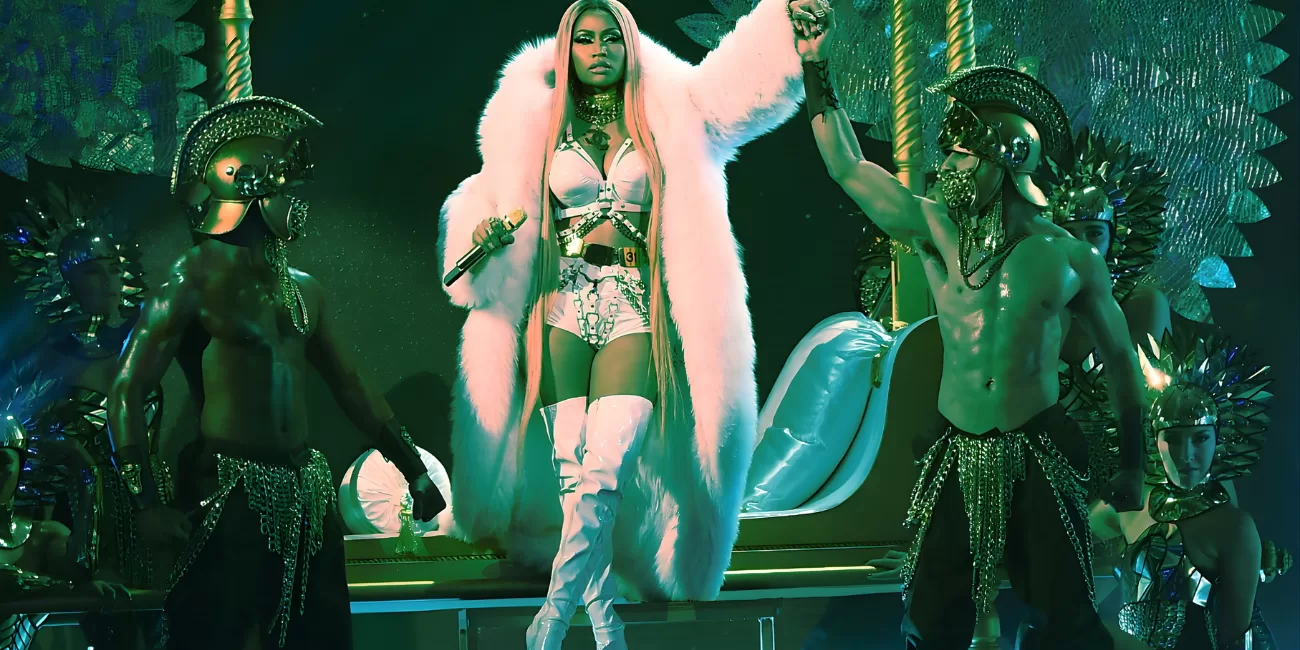
The Harajuku Barbie Dynasty: The Eternal Reign of Queen Nicki
Nicki Minaj’s Unrivaled Reign and the Anticipation for ‘Pink Friday 2’
Published
5 months agoon
October 15, 2025By
Contributor
In the ever-shifting landscape of hip-hop and pop, where careers can be as fleeting as a viral trend, Nicki Minaj has not only secured her throne but has built an entire empire around it. For over a decade, she has been a dominant, disruptive, and undeniable force, reshaping the sound, style, and business of female rap. As the world awaits her next chapter with the upcoming “Pink Friday 2” in 2026, it’s the perfect moment to reflect on the legacy of the artist who taught a generation to go hard.
The Architect of a New Era
Before Nicki Minaj, the idea of a female rapper consistently topping the Billboard charts, breaking streaming records, and commanding global pop culture seemed like a distant dream for many. She didn’t just break through the glass ceiling; she shattered it with a pink sledgehammer. Her impact is multifaceted:
- Commercial Viability: Nicki proved that a female rapper could be the central star, not just a featured guest. Her early mixtapes created an insatiable buzz, leading to a record deal that positioned her as a flagship artist. She paved the way for the commercial success of the diverse wave of female MCs who followed, demonstrating that there was a massive, hungry audience for their artistry.
- Artistic Persona and Camp: Drawing inspiration from icons like Lil’ Kim, Nicki took the concept of alter-egos to a new level. From the soft-spoken Roman Zolanski to the barbie-doll Harajuku Barbie, she created a universe that was as theatrical as it was musical. This blurred the lines between rapper and performance artist, encouraging authenticity and eccentricity in a genre that often prized conformity.
- The Blueprint for Business: Beyond music, Nicki became a master brand architect. From lucrative endorsements to her own perfume lines and a successful stint on American Idol, she showed that an artist’s influence could—and should—extend far beyond the recording studio.
A Chameleon on the Mic: Vocal Abilities
To reduce Nicki Minaj’s talent to simply “rapping” is to overlook her vast technical skill set. Her vocal abilities are a key instrument in her arsenal.
- The Versatile Flow: Nicki is a master of rhythm and cadence. She can switch from a rapid-fire, machine-gun flow on tracks like “Monster” to a smooth, melodic sing-song delivery on hits like “Super Bass” or “Truffle Butter.” This versatility allows her to dominate hardcore hip-hop tracks and seamlessly cross over into pop and dancehall, making her one of the most adaptable features in the game.
- Character and Voice: Her background in theater is evident. She uses distinct character voices, accents, and inflections to bring her lyrics to life. The aggressive, gritty tone of Roman contrasts sharply with the high-pitched, bubbly persona she often employs, adding a layer of theatricality and humor that is uniquely her own.
- Melodic Sense: While not a powerhouse vocalist in the traditional sense, Nicki possesses a keen melodic intuition. Her ability to craft infectious pop hooks, often by blending singing with rhythmic talking, has been central to her chart success. She understands pop structure as well as any hitmaker, using her voice as a versatile tool to create memorable moments.
The Test of Time: Unmatched Longevity
In an industry known for its fickleness, Nicki Minaj’s longevity is her most powerful argument for greatness. Her career is a story of consistent relevance.
- Decade-Dominating Hits: From her explosive debut with “Massive Attack” and “Your Love” to era-defining smashes like “Super Bass,” “Starships,” “Anaconda,” and “Super Freaky Girl,” she has scored hits across three different decades. She has maintained a presence on the charts through multiple musical shifts, from the bloghouse era to the rise of streaming and TikTok.
- The Barbz Dynasty: She cultivated one of the most dedicated and powerful fan bases in the world—the Barbz. This digital army ensures her influence remains potent, breaking records with every release and defending her legacy with fervent loyalty. This direct artist-fan connection has been a cornerstone of her enduring career.
- Evolution, Not Reinvention: While she has adapted to the times, she has never abandoned her core identity. She can deliver a pop-rap anthem, a hardcore verse for the purists, and a vulnerable, introspective track on the same album, proving her depth and satisfying her diverse audience.
A Crown Adorned with Jewels: Monumental Achievements
The numbers and accolades speak for themselves:
- The best-selling female rapper of all time.
- The first female artist to have 100 entries on the Billboard Hot 100.
- The first solo female rapper to have a song debut at #1 on the Hot 100 (“Super Freaky Girl”).
- Multiple Grammy Award nominations, MTV Video Music Awards, and BET Awards.
- Guinness World Records for the most tracks by a female artist on the US singles chart.
- Over 100 million records sold worldwide, solidifying her as a global phenomenon.
The Great Awakening: Anticipating ‘Pink Friday 2’ in 2026
The announcement of “Pink Friday 2,” a sequel to her genre-defining 2010 debut, sent shockwaves through the music world. Slated for a 2026 release, the anticipation is not just for new music, but for a full-circle moment.
This album is poised to be a victory lap and a nostalgic homecoming. By titling it “Pink Friday 2,” Nicki is tapping into the core of her origin story, promising a return to the sound and spirit that made her a star. After a period of focused family life, her return feels like a re-coronation. Fans and critics alike are eager to see how the seasoned veteran, now a wife and mother, will reflect on her journey. Will it be a reinvention or a refinement of the classic Pink Friday sound? How will her evolved perspective influence her lyrics?
One thing is certain: “Pink Friday 2” is more than an album; it’s an event. It’s the next chapter in the story of a woman who defied every odd, changed the game, and continues to write her own rules. The Pinkprint is not complete, and in 2026, the Queen is ready to stamp it once again.
Business
Beyond Influencers: Why Your Next Social Media Manager Might Be a Prompt Engineer
The line between “real” and “AI-generated” will be the new battleground for trust.
Published
5 months agoon
October 8, 2025By
Contributor
The digital landscape, once shaken by the earthquake of TikTok’s algorithmic forge, is bracing for another seismic shift. OpenAI, the company that brought generative AI to the masses with ChatGPT, is now reportedly taking aim at the short-form video throne. Leaks suggest they are developing not just a groundbreaking AI video generator, but a full-fledged social app to showcase it.
This move is more than just another tech giant entering the social media fray. It’s a direct challenge to the very foundations of digital creation and promotion. The question on everyone’s mind: Could this spell the end for digital marketing, social media, and rights management as we know it?
The short answer is no, but it will irrevocably change them.
What OpenAI is Building: Beyond Sora, Into Social
First, let’s understand the pieces. OpenAI has already demonstrated Sora, a text-to-video model that can generate stunning, minute-long video clips from simple prompts. The results are not just impressive; they are, at times, indistinguishable from professionally shot footage.
Now, imagine Sora not as a standalone tool, but as the core engine of a new social platform. Users wouldn’t just scroll; they would conjure. A prompt like “a cyborg cat sipping coffee in a Parisian café, cinematic lighting” could become a viral video in seconds, created by anyone, with no camera, editing suite, or budget required.
This fusion of creation and distribution is the paradigm shift. It removes the final barrier to content creation: production skill.
The Potential End of “Content Creation” As We Know It
The current digital economy is built on a creator hierarchy. You have influencers with production teams, brands with marketing budgets, and amateur creators fighting for attention with their smartphones. OpenAI’s app threatens to flatten this.
- Democratization on Steroids: If everyone can produce high-quality video from a thought, the volume of content will explode. The barrier to entry isn’t just lowered; it’s obliterated.
- The New Currency is Ideas, Not Production: The value will shift from who can produce the best video to who can conceive the most creative, engaging, or hilarious prompt. The “creator” becomes an “orchestrator” or “concept artist.”
- Hyper-Personalization at Scale: A brand could generate not one ad, but thousands of variations tailored to micro-audiences or even individual users in real-time. Imagine a sneaker company whose ad creative changes based on the weather in your location or your recent browsing history.
What’s Next for Digital and Social Media Promotion?
This doesn’t mean the end of marketing; it means its evolution into a new, more complex form.
- The Prompt Strategist is the New Creative Director: Marketing teams will need “prompt engineers” who understand narrative, visual aesthetics, and brand voice, and can translate them into effective textual commands for the AI. A/B testing will be for prompts, not just headlines.
- Authenticity in an Artificial World: When anyone can generate a perfect video, what becomes scarce? Genuine human experience. Live-streams, raw behind-the-scenes moments, and authentic community interaction will become even more valuable. The line between “real” and “AI-generated” will be the new battleground for trust.
- SEO Gives Way to “AEO” (AI Experience Optimization): As social feeds become dominated by AI-generated content, the algorithms will prioritize novel, engaging, and emotionally resonant concepts. Marketers will need to optimize for whatever metric the new AI-native platform uses to measure “wow” factor.
- The Influencer Paradox: Top-tier influencers with strong personal brands will likely thrive, as their unique persona is the “secret sauce” that the AI can’t replicate. However, mid-tier influencers who primarily rely on high-production aesthetics may be disrupted unless they pivot to unparalleled concept creation or authenticity.
The Rights Management Nightmare
This is perhaps the most legally fraught area. The current systems for copyright and intellectual property are completely unprepared.
- Training Data Liability: What if the AI generates a video that unintentionally replicates a protected character, a specific actor’s likeness, or a director’s signature style? Who is liable—the user who prompted it, OpenAI, or the platform?
- The Ownership Question: Who owns the generated video? The user who wrote the prompt? The company that built the model? This is a legal grey area that will be fought in courtrooms for years.
- Deepfakes and Misinformation: The ability to generate hyper-realistic video on demand will supercharge the spread of misinformation and malicious deepfakes. Platforms will be forced to develop near-instantaneous provenance and watermarking tools, likely baked into the AI itself.
The Verdict: Evolution, Not Extinction
OpenAI’s potential move is not the end of digital marketing and social media. Instead, it’s the next logical step in their digitization.
We are moving from a world where we capture and share reality to one where we conjure and share imagination. The core principles of marketing—understanding your audience, telling a compelling story, and building trust—will remain. But the tools, tactics, and very definition of “content” will be transformed beyond recognition.
The end of the old world is indeed in sight. But in its place, a new, more imaginative, and more chaotic digital universe is waiting to be born. The race will not be to those with the biggest budget, but to those with the most compelling ideas and the wisdom to navigate an entirely new set of rules.
Business
The Reel Threat: What Trump’s Proposed Movie Tariffs Mean for Canada’s Film Industry
If implemented, a 100% tariff on films “made” in Canada would be catastrophic for the service production sector. The economic rationale for American studios to shoot in Canada would vanish overnight.
Published
5 months agoon
October 1, 2025By
Contributor
The specter of economic protectionism has once again been cast over the global film industry. Recently, former U.S. President Donald Trump resurrected a familiar theme, floating the idea of a “100% Tariff” on any movie that’s “made” outside the United States. While light on details and legally complex, this kind of saber-rattling sends a chill through the Canadian film and television sector, an industry inextricably linked with its southern neighbor.
For Canada, this isn’t a hypothetical debate about abstract trade policy; it’s a direct threat to a multi-billion dollar industry and tens of thousands of jobs. The vague description of what constitutes a film “made” outside the U.S. is precisely what makes the threat so potent—it could be interpreted in a way that devastates the core of Canada’s production model.
The Canadian Reality: More Than Just a “Backlot”
To understand the impact, one must first understand the structure of the Canadian industry. It operates on two primary tracks:
- Service Production: This is the backbone. American studios and producers bring their projects—from blockbuster superhero films to beloved TV series—to shoot in Canadian cities like Vancouver, Toronto, and Montreal. They are drawn by competitive costs, a skilled workforce, favorable exchange rates, and diverse locations. The production is American-funded and American-distributed, but it is physically “made” in Canada.
- Domestic Production: This includes distinctly Canadian stories, funded by a combination of broadcasters, government agencies like Telefilm Canada and the Canada Media Fund, and private investment. These are the films and shows that tell Canadian stories, but they often rely on the infrastructure and talent pool sustained by the service production sector.
The two are symbiotic. The revenue and stability from high-budget American service work fund the studios, pay the crews, and support the VFX houses that make domestic productions viable.
The Potential Impact of a 100% Tariff
If implemented, a 100% tariff on films “made” in Canada would be catastrophic for the service production sector. The economic rationale for American studios to shoot in Canada would vanish overnight.
- The Immediate Exodus: A project with a $100 million budget would instantly see its U.S. distribution costs double to $200 million. Studios would not absorb this cost; they would simply move production back to the U.S. or to other non-tariffed countries like the UK, Australia, or Eastern Europe.
- Economic Collapse: The direct economic contribution of foreign production to Canada is in the billions annually. A 2022 report from the Canadian Media Producers Association (CMPA) noted that foreign location and service production spending in Canada reached $4.5 billion in 2021/2022. This activity supports a vast ecosystem of crew, actors, caterers, drivers, and hospitality workers.
- The “Brain Drain” Accelerates: Canada’s greatest asset is its deep pool of talented, experienced film professionals. If productions leave, so too will the talent. Directors, cinematographers, special effects artists, and carpenters would be forced to follow the work south, permanently hollowing out the Canadian industry.
- Domestic Productions Suffer: With the service sector gutted, the infrastructure costs for domestic productions would soar. Soundstages would close, equipment rental houses would shutter, and it would become prohibitively expensive to produce high-quality Canadian content. The entire production ecosystem would shrink dramatically.
A Call to Action: How Canada Can Adapt and Fortify Itself
While the threat may be political posturing, it serves as a stark warning against over-reliance on a single, volatile partner. Canadian film production companies and distributors cannot afford to be passive. They must act now to adapt to this new reality.
For Film Production Companies:
- Diversify Co-Production Partnerships: Aggressively pursue official co-productions with countries beyond the U.S. Canada has co-production treaties with over 50 countries, including major players in Europe and Asia. By partnering with producers in the UK, France, Germany, Australia, and South Korea, Canadian companies can create globally-oriented content with built-in international distribution and funding, making them less vulnerable to U.S. policy shifts.
- Double Down on IP Ownership: The most significant shift must be a strategic move from being a “service provider” to being an “IP creator.” Canadian producers must focus on developing, financing, and owning their own intellectual property. A Canadian-owned hit show or film, like Schitt’s Creek, generates far more long-term value than hosting a dozen American service productions.
- Leverage Digital Distribution: Use streaming platforms to bypass traditional gatekeepers. By creating high-quality, distinctive content with international appeal, producers can sell directly to global streamers or use platforms like YouTube, Vimeo, and specialized streaming services to build an audience worldwide.
For Film Distributors:
- Build New Export Pathways: Distributors must become experts in non-U.S. markets. This means attending film markets in Berlin, Cannes, and Busan with a focused strategy to sell Canadian content into Europe, Latin America, and Asia. Building relationships with broadcasters and streamers in these regions is crucial.
- Champion Canadian Stories with Global Appeal: Distributors have a role in curating and marketing Canadian films that travel well. Stories with universal themes—human drama, thrillers, comedies—can find audiences everywhere if marketed correctly. The success of films from Quebec in France is a prime example of this potential.
- Advocate for Modernized Government Support: The industry must collectively lobby the federal and provincial governments to modernize support mechanisms. This includes:
- Increasing the funding and flexibility of tax credits to support IP development, not just physical production.
- Strengthening public broadcasters (CBC/Radio-Canada) and ensuring they have the mandate and budget to commission ambitious Canadian content.
- Negotiating and modernizing trade agreements that protect and promote cultural exports, recognizing film and TV as a key economic and cultural sector.
Conclusion: A Wake-Up Call, Not a Death Knell
Donald Trump’s tariff threat is a stark reminder of the fragility of an industry built on a foundation of service work. While the immediate implementation of such a policy remains uncertain, the risk is too great to ignore.
For Canada, this moment must serve as a catalyst for a long-overdue strategic pivot. By aggressively diversifying international partnerships, fiercely championing the creation and ownership of Canadian IP, and building robust, direct pathways to global audiences, the industry can transform this vulnerability into resilience. The goal is not to end the relationship with Hollywood, but to ensure that the Canadian film industry can stand on its own two feet, telling its stories to the world, no matter who occupies the White House. The curtain is rising on a new act for Canadian cinema; it’s time to ensure the show goes on.
From “Killing Me Softly” to a Federal Sentence: The Pras Michel Saga and the Peril at the Intersection of Music and Politic.
My Hair Is Killing Me: Examining the Health Impact of Synthetic Braiding Hair on Black Women
The Harajuku Barbie Dynasty: The Eternal Reign of Queen Nicki
Trending
-
Business3 years agoWhat Genre of Music Suits My Voice? How To Find Your Vocal Style
-
Business4 years agoThe Day Jordin Sparks Stopped Singing
-
Business3 years agoCHRIS BROWN: The Top Recording Artist ALIVE [Vocal Range]
-
Business4 years agoBenefits of Joining a Choir
-
Business4 years agoChris Brown’s 12th Studio Album “Breezy”
-
Business4 years agoFalsetto: The enduring love affair with the soaring male voice.
-
Business4 years agoFood for Singers: The Diva Diet
-
Business4 years agoShakira joins forces with Puerto Rican rapper Rauw Alejandro