
Connect with us

Fashion

How Will Smith Influenced An Iconic Fresh Prince Fashion Moment

It was only a matter of time until the series was rebooted for modern times, and that happened earlier this year courtesy of “Bel-Air,” a reimagining that’s way more dramatic than its predecessor. Needless to say, the sitcom’s legacy is proving to be everlasting and inspirational. 

Photo: Shutterstock

Published

on

From 1990 to 1996, NBC’s “The Fresh Prince of Bel-Air” was one of the hottest sitcoms on television. At the same time, the show remains beloved among fans of small-screen comedies thanks to the power of reruns and the advent of streaming.

“The Fresh Prince of Bel-Air” sees Will Smith star as a fictionalized version of himself — a West Philadelphia lifer who gets sent to live with his Uncle Phil (James Avery), Aunt Viv (Jane Hubert, Daphne Maxwell Reid), his cousins, and their sarcastic butler in Bel-Air, California. The protagonist’s easygoing charm and working-class sensibilities provide a hilarious counterbalance to his new family’s affluent lifestyle, often resulting in some verbal sparring with his Uncle Phil. At the heart of it all, however, is a feel-good family sitcom with topical themes that carry weight all these years later (per Bustle).

Of course, “The Fresh Prince of Bel-Air” is also memorable for Will’s fashion. He was known for rocking some pretty extravagant outfits, some of which came from Smith’s own imagination. In fact, one of Smith’s more off-the-cuff ideas led to a recurring gag that has since informed real-life fashion.

The flipped jacket was Will Smith’s idea

Back in 2019, Will Smith launched a clothing line to celebrate the iconic attires worn on “The Fresh Prince of Bel-Air.” It allowed fans of the sitcom to purchase some of the hip hop-themed fashion that helped turn Smith into one of the biggest television stars of the 1990s. Still, some of the show’s fans were more interested in finding out about the origins of Will’s funky school jacket, which he wore inside out throughout his tenure on the show. The actor previously told his YouTube followers that the quirky style choice was a happy accident as no one told him that he was wearing it in reverse. That being said, it might have been a calculated idea on Smith’s part from the get-go.During a 2021 Q&A session with GQ, he revealed that it was his decision to wear the jacket inside out, confirming that it was an example of his “mad creativity” on the show. Smith went on to explain that he wanted to be different and stand out, but he didn’t expect fans to still be talking about the jacket almost three decades later. “It’s weird that you do something that seems so little and 30 years later, it’s still around,” he added.

Business

My Hair Is Killing Me: Examining the Health Impact of Synthetic Braiding Hair on Black Women

Black women report symptoms that go far beyond mild irritation.

Published

on

For generations, braided hairstyles have been a cornerstone of Black culture, symbolizing everything from social status and kinship to personal expression and resilience. The use of synthetic braiding hair has made these protective styles more accessible and affordable than ever. However, in recent years, a growing number of women have reported concerning reactions to the hair, leading to urgent questions about its safety.

This article delves into the potential health impacts of synthetic braiding hair, examining the ingredients, the reported issues, and the crucial recommendations for making safer choices.

The Problem: More Than Just Itchy Scalp

While a little itching when first installing braids is common, many Black women report symptoms that go far beyond mild irritation. These can include:
  • Severe Scalp Dermatitis: Intense itching, redness, swelling, and flaking.
  • Bumps and Blisters: Painful, pus-filled bumps (folliculitis) along the hairline and parts.
  • Hair Loss: Traction alopecia from the style’s tightness, compounded by inflammation that can weaken hair follicles.
  • Scalp Burns and Sores: A sensation of the scalp “burning” or “crawling,” sometimes leading to open sores.
  • Allergic Reactions: Swelling of the face, eyelids, and ears.

These reactions are not just anecdotal. A 2022 study published in the Journal of the American Academy of Dermatology identified a specific pattern of allergic contact dermatitis directly linked to synthetic braids, dubbing it the “Kanekalon phenomenon,” after a popular brand of braiding hair.

The Culprits: What’s in the Hair?

Synthetic braiding hair is typically made from modacrylic, a polymer derived from acrylonitrile and vinyl chloride. The hair itself is not the only concern; the chemical coatings and dyes used to give it a more natural look and feel are often the primary triggers.

The main suspects causing adverse reactions are:

  1. Formaldehyde: Perhaps the most alarming ingredient. Formaldehyde or formaldehyde-releasing preservatives are sometimes used in the coating of synthetic hair to prevent mildew during shipping and storage. Formaldehyde is a known sensitizer and a Group 1 carcinogen, meaning it is proven to cause cancer in humans. Direct, prolonged scalp contact can cause severe allergic reactions and skin irritation.
  2. Acrylates: These plastics are used to seal the ends of the hair when you dip them in hot water. They are also common allergens and can cause significant contact dermatitis.
  3. Dyes and Colorants: The vibrant colors of synthetic hair come from dyes that can contain heavy metals or other chemicals that some individuals are sensitive to.
  4. Plasticizers: Chemicals added to make the plastic fibers more flexible can also leach out and irritate the skin.

The Cancer Question: Are Synthetic Braids Carcinogenic?

This is the most serious concern. The direct answer is: There is no conclusive scientific evidence that wearing synthetic braids causes cancer.

However, the concern is not unfounded and stems from the ingredients:

  • Vinyl Chloride, a component of modacrylic fiber, is a known human carcinogen.
  • Formaldehyde, sometimes found as a contaminant, is a known human carcinogen.

The critical distinction is between ingestion/inhalation and skin contact. The cancer risks for these chemicals are primarily associated with long-term, high-level inhalation (as seen in factory workers) or ingestion. The risk from dermal (skin) absorption through the scalp is considered significantly lower and not well-studied.

While the risk of developing cancer from occasional braid wear is likely very low, the potential presence of known carcinogens in a product worn on the head for weeks at a time is a valid cause for caution and demands greater transparency and regulation.

Recommendations for Safer Styling

You don’t have to give up braids entirely. Informed choices and proper practices can dramatically reduce the risk of a reaction.

1. Pre-Installation: The “Prep & Test” Ritual

  • WASH THE HAIR: This is the single most important step. Before installation, soak the synthetic hair in a mixture of apple cider vinegar and water for 15-30 minutes, then rinse thoroughly. Follow this by washing the hair with a clarifying shampoo to remove surface chemicals, dyes, and residues. Let it air dry completely.
  • CONDUCT A PATCH TEST: Tape a small strand of the washed and dried synthetic hair to the skin behind your ear or on your inner arm. Leave it for 24-48 hours. If you see any redness, itching, or swelling, do not use that hair.

2. Smart Shopping: Choosing Better Hair

  • Look for “Hypoallergenic” Brands: Some brands now specifically market themselves as free of formaldehyde and other common irritants. They may be more expensive, but your health is worth the investment.
  • Opt for Sealed Packages: Hair sold in sealed packaging is less likely to be contaminated with dust, mold, or other environmental irritants compared to bulk, open-hair.
  • Consider Human Hair or Heat-Friendly Synthetics: While more costly, human hair braids eliminate the risk of synthetic chemical reactions. “Heat-friendly” synthetic hair often has a different coating that may be less irritating, though it should still be washed.

3. During and After Installation

  • Communicate with Your Stylist: Advocate for yourself. Ensure your stylist does not braid too tightly, as this can cause traction alopecia and force the hair fibers deeper into irritated follicles.
  • Moisturize Wisely: Use a light, water-based moisturizer on your scalp and natural hair. Avoid heavy oils and butters that can trap bacteria and residue against the scalp.
  • Don’t Wear Styles Too Long: 6-8 weeks is the general maximum. Wearing braids for longer increases the risk of buildup, matting, and prolonged exposure to any remaining irritants.
  • Listen to Your Body: If your scalp is burning, intensely itchy, or developing painful sores, do not “tough it out.” Take the braids out immediately and consult a dermatologist.

Conclusion

Synthetic braiding hair is a cultural and practical staple, but its potential health impacts cannot be ignored. While not definitively cancer-causing, the presence of harsh chemicals and known allergens poses a real risk for severe skin reactions.

The power lies in informed consumerism. By demanding cleaner products from manufacturers, washing hair before use, and listening to our bodies, Black women can continue to celebrate the beauty and convenience of braided styles without compromising their health. The choice to wear braids should be one of empowerment, not one that leads to pain and distress.

Continue Reading

Business

The Harajuku Barbie Dynasty: The Eternal Reign of Queen Nicki

Nicki Minaj’s Unrivaled Reign and the Anticipation for ‘Pink Friday 2’
Published

on

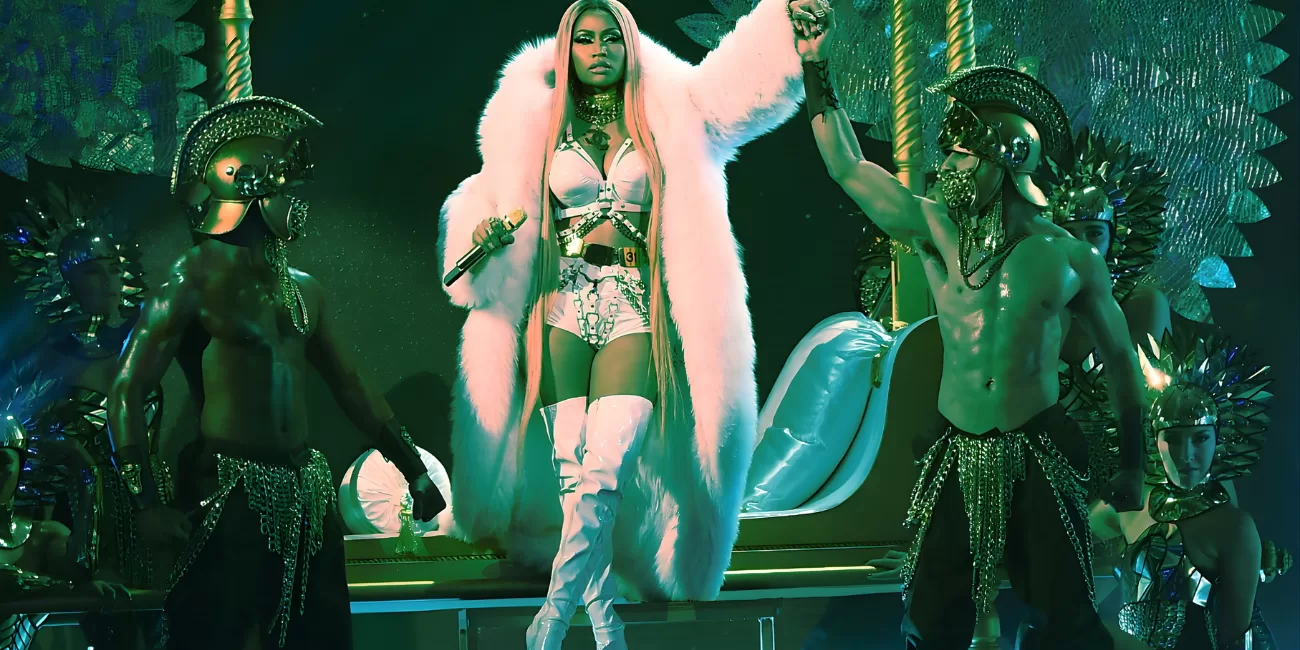
In the ever-shifting landscape of hip-hop and pop, where careers can be as fleeting as a viral trend, Nicki Minaj has not only secured her throne but has built an entire empire around it. For over a decade, she has been a dominant, disruptive, and undeniable force, reshaping the sound, style, and business of female rap. As the world awaits her next chapter with the upcoming “Pink Friday 2” in 2026, it’s the perfect moment to reflect on the legacy of the artist who taught a generation to go hard.

The Architect of a New Era

Before Nicki Minaj, the idea of a female rapper consistently topping the Billboard charts, breaking streaming records, and commanding global pop culture seemed like a distant dream for many. She didn’t just break through the glass ceiling; she shattered it with a pink sledgehammer. Her impact is multifaceted:

  • Commercial Viability: Nicki proved that a female rapper could be the central star, not just a featured guest. Her early mixtapes created an insatiable buzz, leading to a record deal that positioned her as a flagship artist. She paved the way for the commercial success of the diverse wave of female MCs who followed, demonstrating that there was a massive, hungry audience for their artistry.
  • Artistic Persona and Camp: Drawing inspiration from icons like Lil’ Kim, Nicki took the concept of alter-egos to a new level. From the soft-spoken Roman Zolanski to the barbie-doll Harajuku Barbie, she created a universe that was as theatrical as it was musical. This blurred the lines between rapper and performance artist, encouraging authenticity and eccentricity in a genre that often prized conformity.
  • The Blueprint for Business: Beyond music, Nicki became a master brand architect. From lucrative endorsements to her own perfume lines and a successful stint on American Idol, she showed that an artist’s influence could—and should—extend far beyond the recording studio.

A Chameleon on the Mic: Vocal Abilities

To reduce Nicki Minaj’s talent to simply “rapping” is to overlook her vast technical skill set. Her vocal abilities are a key instrument in her arsenal.

  • The Versatile Flow: Nicki is a master of rhythm and cadence. She can switch from a rapid-fire, machine-gun flow on tracks like “Monster” to a smooth, melodic sing-song delivery on hits like “Super Bass” or “Truffle Butter.” This versatility allows her to dominate hardcore hip-hop tracks and seamlessly cross over into pop and dancehall, making her one of the most adaptable features in the game.
  • Character and Voice: Her background in theater is evident. She uses distinct character voices, accents, and inflections to bring her lyrics to life. The aggressive, gritty tone of Roman contrasts sharply with the high-pitched, bubbly persona she often employs, adding a layer of theatricality and humor that is uniquely her own.
  • Melodic Sense: While not a powerhouse vocalist in the traditional sense, Nicki possesses a keen melodic intuition. Her ability to craft infectious pop hooks, often by blending singing with rhythmic talking, has been central to her chart success. She understands pop structure as well as any hitmaker, using her voice as a versatile tool to create memorable moments.

The Test of Time: Unmatched Longevity

In an industry known for its fickleness, Nicki Minaj’s longevity is her most powerful argument for greatness. Her career is a story of consistent relevance.

  • Decade-Dominating Hits: From her explosive debut with “Massive Attack” and “Your Love” to era-defining smashes like “Super Bass,” “Starships,” “Anaconda,” and “Super Freaky Girl,” she has scored hits across three different decades. She has maintained a presence on the charts through multiple musical shifts, from the bloghouse era to the rise of streaming and TikTok.
  • The Barbz Dynasty: She cultivated one of the most dedicated and powerful fan bases in the world—the Barbz. This digital army ensures her influence remains potent, breaking records with every release and defending her legacy with fervent loyalty. This direct artist-fan connection has been a cornerstone of her enduring career.
  • Evolution, Not Reinvention: While she has adapted to the times, she has never abandoned her core identity. She can deliver a pop-rap anthem, a hardcore verse for the purists, and a vulnerable, introspective track on the same album, proving her depth and satisfying her diverse audience.

A Crown Adorned with Jewels: Monumental Achievements

The numbers and accolades speak for themselves:

  • The best-selling female rapper of all time.
  • The first female artist to have 100 entries on the Billboard Hot 100.
  • The first solo female rapper to have a song debut at #1 on the Hot 100 (“Super Freaky Girl”).
  • Multiple Grammy Award nominations, MTV Video Music Awards, and BET Awards.
  • Guinness World Records for the most tracks by a female artist on the US singles chart.
  • Over 100 million records sold worldwide, solidifying her as a global phenomenon.

The Great Awakening: Anticipating ‘Pink Friday 2’ in 2026

The announcement of “Pink Friday 2,” a sequel to her genre-defining 2010 debut, sent shockwaves through the music world. Slated for a 2026 release, the anticipation is not just for new music, but for a full-circle moment.

This album is poised to be a victory lap and a nostalgic homecoming. By titling it “Pink Friday 2,” Nicki is tapping into the core of her origin story, promising a return to the sound and spirit that made her a star. After a period of focused family life, her return feels like a re-coronation. Fans and critics alike are eager to see how the seasoned veteran, now a wife and mother, will reflect on her journey. Will it be a reinvention or a refinement of the classic Pink Friday sound? How will her evolved perspective influence her lyrics?

One thing is certain: “Pink Friday 2” is more than an album; it’s an event. It’s the next chapter in the story of a woman who defied every odd, changed the game, and continues to write her own rules. The Pinkprint is not complete, and in 2026, the Queen is ready to stamp it once again.

Continue Reading

Business

Beyond Influencers: Why Your Next Social Media Manager Might Be a Prompt Engineer

The line between “real” and “AI-generated” will be the new battleground for trust.
Published

on

The digital landscape, once shaken by the earthquake of TikTok’s algorithmic forge, is bracing for another seismic shift. OpenAI, the company that brought generative AI to the masses with ChatGPT, is now reportedly taking aim at the short-form video throne. Leaks suggest they are developing not just a groundbreaking AI video generator, but a full-fledged social app to showcase it.

This move is more than just another tech giant entering the social media fray. It’s a direct challenge to the very foundations of digital creation and promotion. The question on everyone’s mind: Could this spell the end for digital marketing, social media, and rights management as we know it?

The short answer is no, but it will irrevocably change them.

What OpenAI is Building: Beyond Sora, Into Social

First, let’s understand the pieces. OpenAI has already demonstrated Sora, a text-to-video model that can generate stunning, minute-long video clips from simple prompts. The results are not just impressive; they are, at times, indistinguishable from professionally shot footage.

Now, imagine Sora not as a standalone tool, but as the core engine of a new social platform. Users wouldn’t just scroll; they would conjure. A prompt like “a cyborg cat sipping coffee in a Parisian café, cinematic lighting” could become a viral video in seconds, created by anyone, with no camera, editing suite, or budget required.

This fusion of creation and distribution is the paradigm shift. It removes the final barrier to content creation: production skill.

The Potential End of “Content Creation” As We Know It

The current digital economy is built on a creator hierarchy. You have influencers with production teams, brands with marketing budgets, and amateur creators fighting for attention with their smartphones. OpenAI’s app threatens to flatten this.

  • Democratization on Steroids: If everyone can produce high-quality video from a thought, the volume of content will explode. The barrier to entry isn’t just lowered; it’s obliterated.
  • The New Currency is Ideas, Not Production: The value will shift from who can produce the best video to who can conceive the most creative, engaging, or hilarious prompt. The “creator” becomes an “orchestrator” or “concept artist.”
  • Hyper-Personalization at Scale: A brand could generate not one ad, but thousands of variations tailored to micro-audiences or even individual users in real-time. Imagine a sneaker company whose ad creative changes based on the weather in your location or your recent browsing history.

What’s Next for Digital and Social Media Promotion?

This doesn’t mean the end of marketing; it means its evolution into a new, more complex form.

  1. The Prompt Strategist is the New Creative Director: Marketing teams will need “prompt engineers” who understand narrative, visual aesthetics, and brand voice, and can translate them into effective textual commands for the AI. A/B testing will be for prompts, not just headlines.
  2. Authenticity in an Artificial World: When anyone can generate a perfect video, what becomes scarce? Genuine human experience. Live-streams, raw behind-the-scenes moments, and authentic community interaction will become even more valuable. The line between “real” and “AI-generated” will be the new battleground for trust.
  3. SEO Gives Way to “AEO” (AI Experience Optimization): As social feeds become dominated by AI-generated content, the algorithms will prioritize novel, engaging, and emotionally resonant concepts. Marketers will need to optimize for whatever metric the new AI-native platform uses to measure “wow” factor.
  4. The Influencer Paradox: Top-tier influencers with strong personal brands will likely thrive, as their unique persona is the “secret sauce” that the AI can’t replicate. However, mid-tier influencers who primarily rely on high-production aesthetics may be disrupted unless they pivot to unparalleled concept creation or authenticity.

The Rights Management Nightmare

This is perhaps the most legally fraught area. The current systems for copyright and intellectual property are completely unprepared.

  • Training Data Liability: What if the AI generates a video that unintentionally replicates a protected character, a specific actor’s likeness, or a director’s signature style? Who is liable—the user who prompted it, OpenAI, or the platform?
  • The Ownership Question: Who owns the generated video? The user who wrote the prompt? The company that built the model? This is a legal grey area that will be fought in courtrooms for years.
  • Deepfakes and Misinformation: The ability to generate hyper-realistic video on demand will supercharge the spread of misinformation and malicious deepfakes. Platforms will be forced to develop near-instantaneous provenance and watermarking tools, likely baked into the AI itself.

The Verdict: Evolution, Not Extinction

OpenAI’s potential move is not the end of digital marketing and social media. Instead, it’s the next logical step in their digitization.

We are moving from a world where we capture and share reality to one where we conjure and share imagination. The core principles of marketing—understanding your audience, telling a compelling story, and building trust—will remain. But the tools, tactics, and very definition of “content” will be transformed beyond recognition.

The end of the old world is indeed in sight. But in its place, a new, more imaginative, and more chaotic digital universe is waiting to be born. The race will not be to those with the biggest budget, but to those with the most compelling ideas and the wisdom to navigate an entirely new set of rules.

Continue Reading

Trending